Odd Bits / Your files
Who Said It?
Turn any chat into a quiz. Pick real lines, send the link, and see who really knows the chat.
Opening…
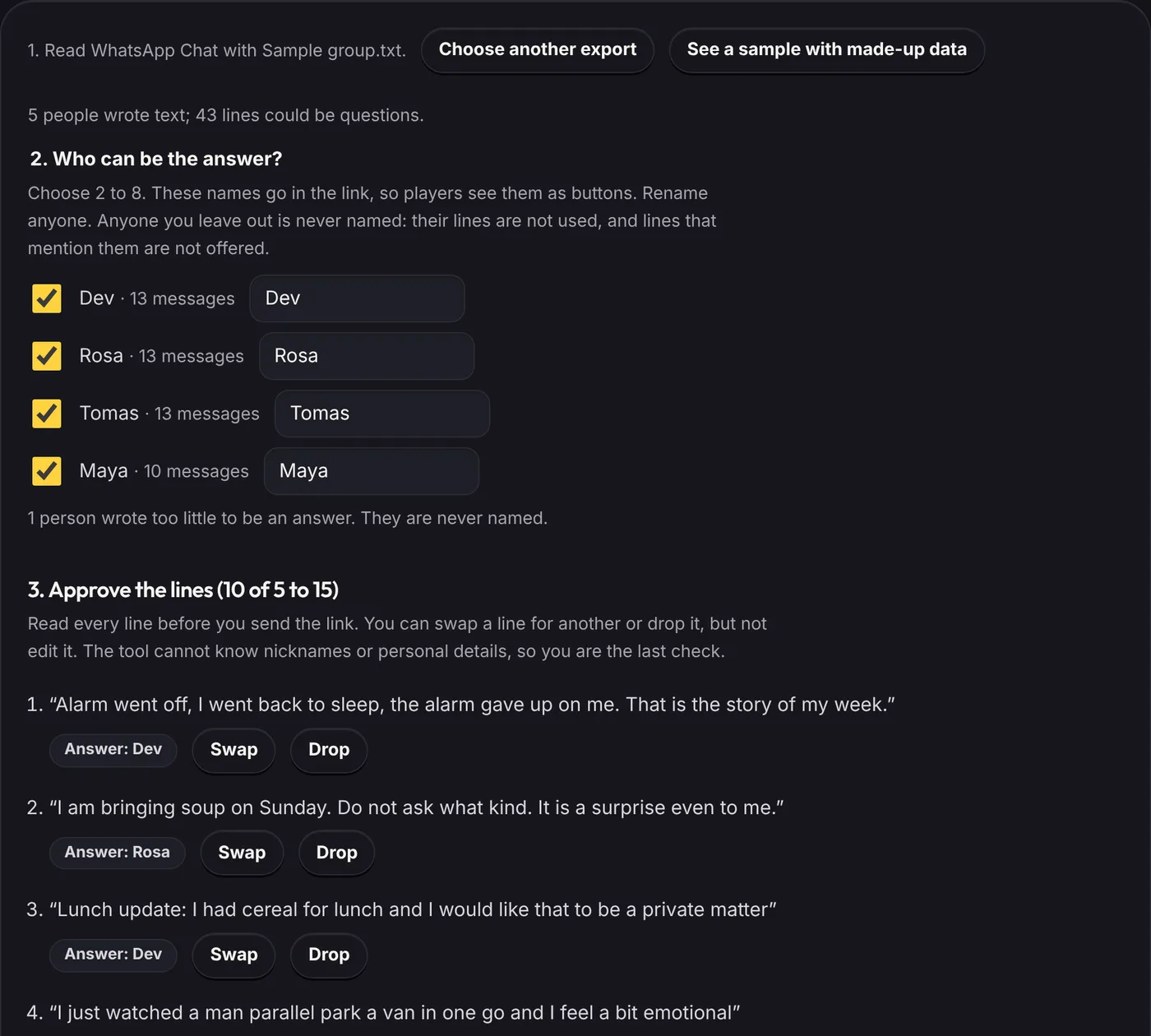
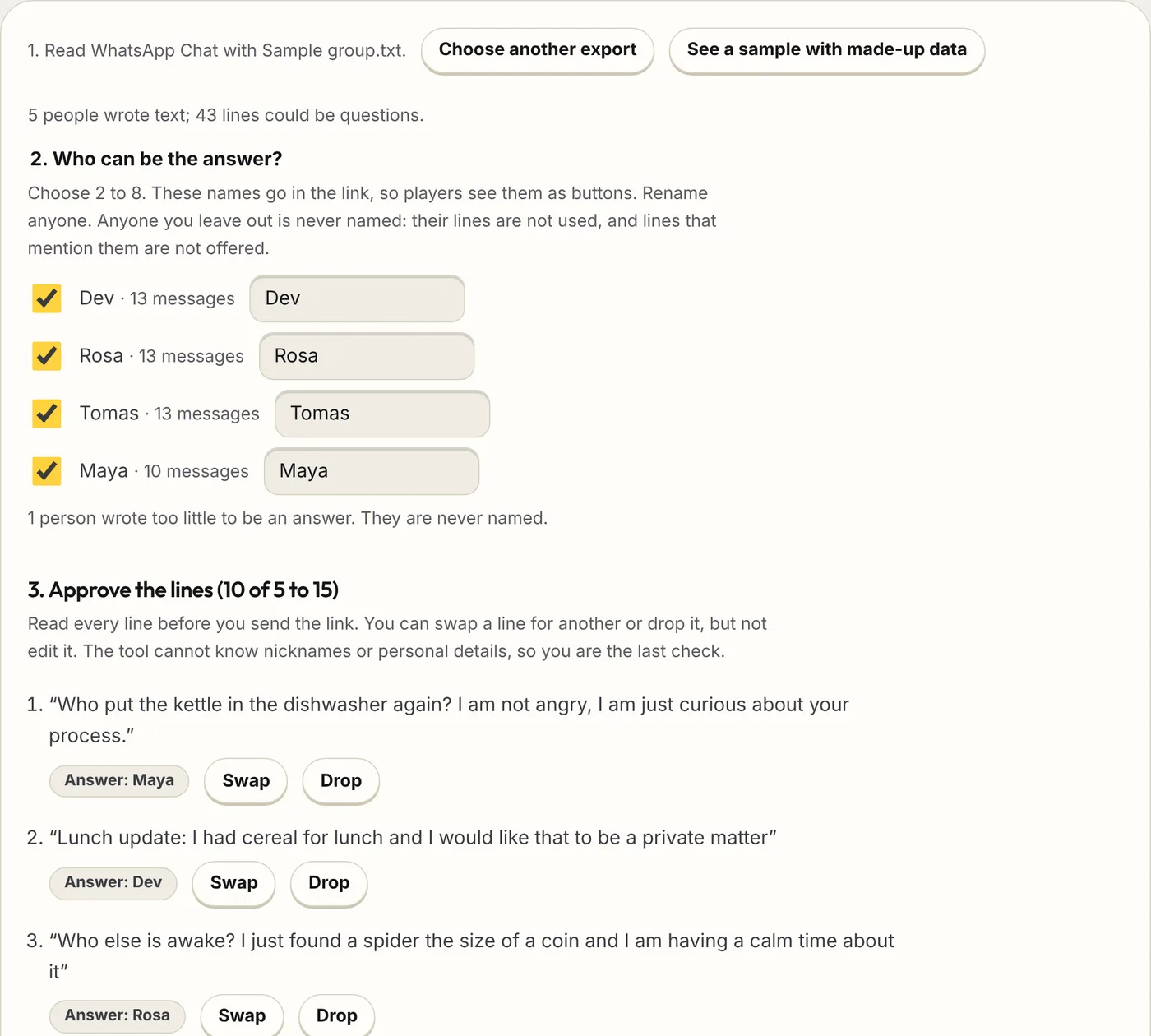
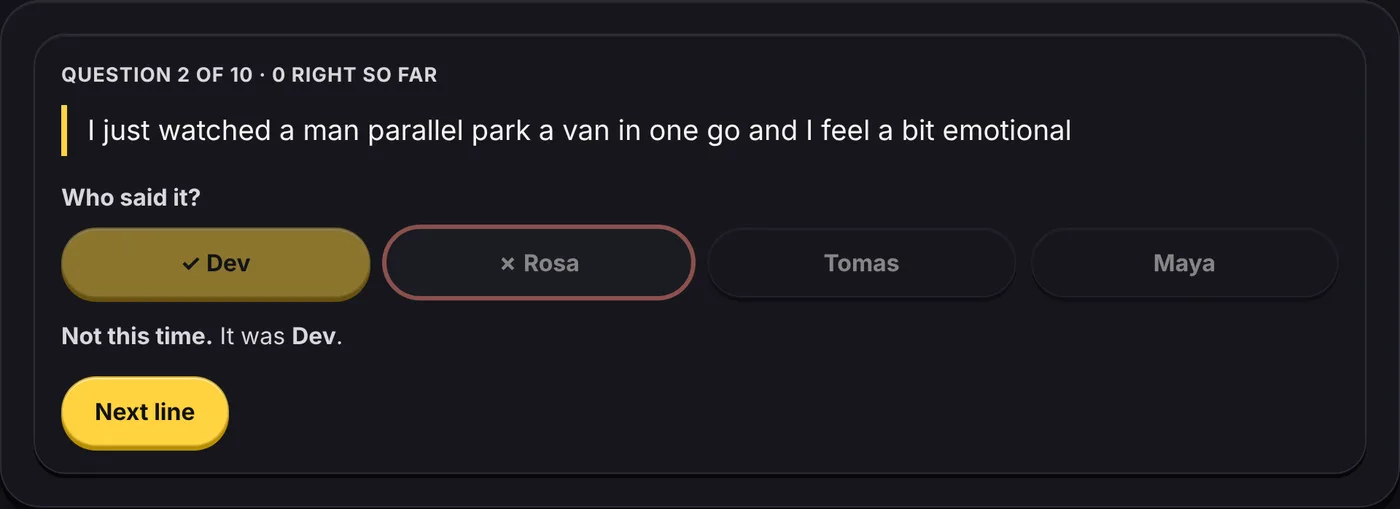
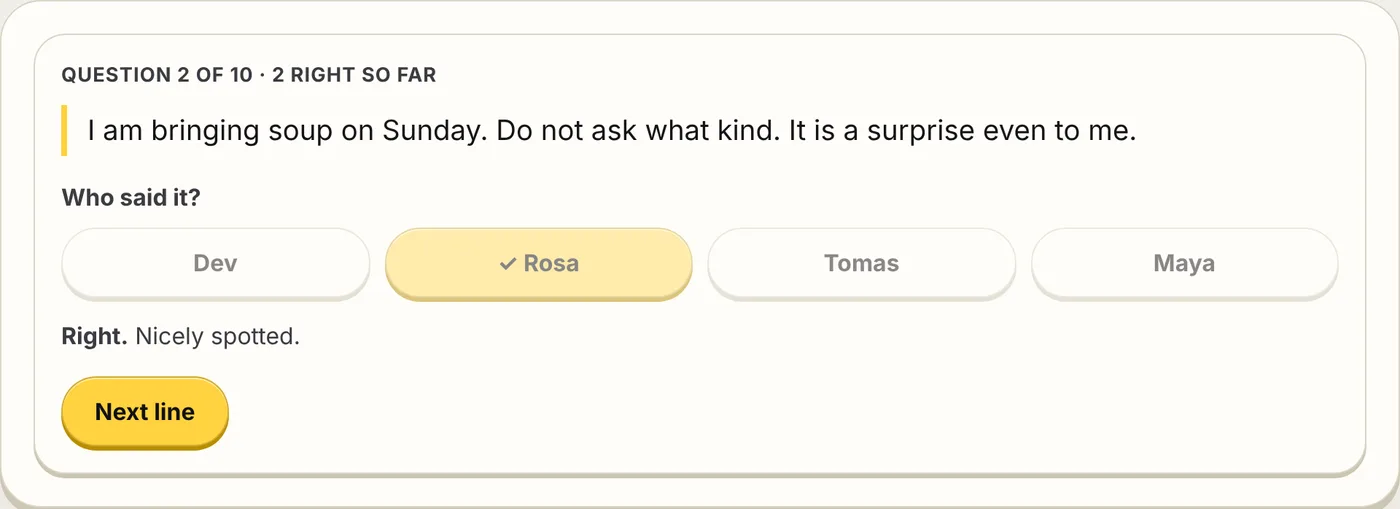
Load a WhatsApp or Telegram chat and the tool suggests lines people actually sent. You approve 5 to 15 of them, choose who the answers are, and copy one link. Everyone you send it to opens the quiz in their browser, taps who said each line, and gets a score card to share.
- What you get
- Real lines from your chat, picked by you from suggestions, as a quiz of 5 to 15 questions
- One link to send: players open it in their browser and get a score card to share
- The quiz is in the link itself, so there is nothing to sign up for and nothing stored
- Works with
- WhatsApp .txt or .zipTelegram result.json
- Version
- v1.0, updated 2026-10-23
What it never does
- Offer a line with a phone number, an email address, a link, an @handle, a key-like string or a home path in it, or a media, deleted-message or system line. It cannot see nicknames or other personal details, so read every line before you send the link
- Name anyone you leave out of the answers. Their lines are not used, and lines that contain their name or first name are not offered. A nickname can still slip through
- Start with a phone number as an answer. A sender saved as a number begins as "Person 1" until you rename them
- Let you edit a line. You can swap or drop a line, not reword it, so every question is something that was really sent
- Hide the quiz from anyone who has the link. The lines and the answers are in it
- Save the quiz, a player’s answers or a score in the browser. They exist in the address and in the open tab only
Questions
Where is the quiz kept?
In the link. After the # in the address is the whole quiz: the title, the names and the lines with their answers, squeezed with deflate and written in base64url. Browsers do not send the part after the # to our server. It does go wherever you paste the link, and anyone who has the link can decode it and read the lines and the answers.
Why does it use real names?
A quiz needs names to tap. They start as the names in the export (a number with no saved name starts as "Person 1") and you can rename anyone. People you leave out are never named, and renaming someone also keeps their real name out of the lines.
Which lines does it suggest?
Text messages of 15 to 200 characters from the busiest senders (at least 10 text messages each, up to 8 people). Lines with a phone number, email address, link, @handle, key-like string or home path are left out, as are media, deleted-message and system lines. Among the rest, lines using words that few messages in the chat use rank higher, lines near 80 characters rank higher, and a question mark, exclamation mark or emoji adds a little. Then it takes turns between people so one person does not fill the list.
How is the score worked out?
The score is the number you got right out of the number of questions, and the percentage is that rounded to a whole number. The verdict comes from the share right: all right: Full marks; 80% or more: Group expert; 60% or more: Good listener; 40% or more: Half and half; 20% or more: Still learning; 0% or more: Fresh eyes. Nothing else changes it.
What if the link is too long?
The link can be up to 4,000 characters, so chat apps do not cut it. The page shows the length as you work and says how far over you are. Drop a question or swap a long line for a shorter one.
What happens with a broken or edited link?
The page checks the quiz strictly. If the link was cut short, changed, made with another version of this page or is too long, it says so in plain words and offers to make your own. It does not try to guess what was meant.
Which exports work?
A WhatsApp chat export (the .txt, or the .zip WhatsApp makes, from Android or iPhone) and result.json from Telegram Desktop. Photos and other files in a zip are never opened. The whole file is read in your browser, up to 250 MB.
Not affiliated with WhatsApp, Meta or Telegram.